
overview
a brief ethiopian history
Explore the intertwined history of Ethiopia and the Ethiopian Crown Council, a narrative steeped in rich heritage and enduring traditions. This historical journey unveils the remarkable tale of a nation that has preserved its cultural identity for millennia, while the Ethiopian Crown Council continues to play a pivotal role in shaping the nation’s destiny. Delve into the past, discover the present, and witness the enduring spirit that defines Ethiopia and its esteemed royal legacy
Overview
Ethiopian History
Ethiopia boasts one of the richest histories of any country or culture on earth. Its archaeological remains show a continuous record of complex settlements for nearly three thousand years. With Egypt and Nubia, Ethiopia is one of the African civilizations boasting a continuous written record since antiquity. The ancient kingdom centered around the city of Aksum – now in the highlands of northern Ethiopia – was a regional superpower: it engaged in major trade with the Roman Empire and southern Asia, and projected military strength into modern Sudan and Yemen. Aksum’s stelae are some of ancient Africa’s greatest monuments.
Medieval Ethiopia produced a rich artistic and literary tradition, in large part through the Ethiopian Orthodox Tewahedo Church, one of the oldest indigenous Christian churches in the world. The Kebra Negast tells the story of Ethiopia’s origins in the union between King Solomon and the Queen of Sheba, and how their son, Ethiopia’s first Emperor Menelik, brought the Ark of the Covenant to Aksum, where it still resides.
Modern Ethiopia is a potent symbol of freedom and anti-colonialism. Under Emperor Menelik II, Ethiopia defeated Italian invaders in 1896 and preserved its independence as the rest of Africa fell under colonial rule. Under Emperor Haile Selassie I, Ethiopia resisted fascist occupation under Mussolini. After World War II, the emperor became a global voice for freeing Africa from colonial rule.

Ethiopia Since the Revolution
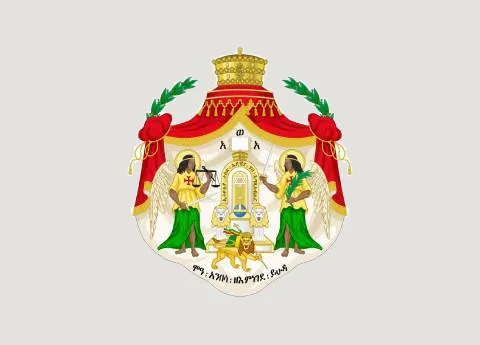
Communist revolutionaries deposed Emperor Haile Selassie I in 1974 and killed him in 1975. His son and heir apparent, the Crown Prince Asfa-Wossen, was abroad at the time of the revolution, in ill health and unable to resist the forces of change sweeping his country. In the late 1980s, he assumed the throne while still in exile, becoming Emperor Amha Selassie I. In that capacity, he reconstituted the Ethiopian Crown Council, the administrative body responsible for advising reigning emperors and guarding the crown during periods of interregnum.
In 1993, he appointed his nephew, Prince Ermias Sahle-Selassie, the late emperor’s grandson, to be president of the Crown Council. Since Amha Selassie’s death in 1997, Prince Ermias has continued to represent the Ethiopian crown, advocating for its restoration as a constitutional monarchy and supporting numerous philanthropic and cultural causes throughout the country.